Dr. Steven Brooksher, DDS
Address: 1010 South Acadian Thruway, Ste. A, Baton Rouge, LA 70806
  • Home
  • About Us
    • Meet Dr. Brooksher
    • Meet Our Team
    • Your First Visit
    • Contact Us
    • What Makes Us Different?
    • Patient Forms
    • Financial Policies
    • Pay Online
    • Request an Appointment
  • Cosmetic Dentistry
    • Cosmetic Dentistry
    • Smile Gallery
    • Porcelain Veneers
    • Dental Bonding
    • Teeth Whitening
    • Smile Makeover
    • SmileFy Smile Design
    • Porcelain Crowns
Call us: (225) 346-8625
  • Tooth Replacement
    • Dental Implants
    • Dental Implant Hybrids
    • Implant Overdentures
    • Dentures
  • Sedation
  • Other
    • Emergency Dentist
    • Metal-Free Dentist
    • Porcelain Crowns
    • TMJ Treatment
Life-changing dentistry

Complete dental care, from checkups and cleanings to complex restorative dentistry and life-changing smile makeovers.

Request an
Appointment

Are Dental Implants Permanent?

Posted on October 12, 2021 by AllSmiles.

Dental implants outlast a bridge or a partial denture. But how long can you expect your implants to last? Are dental implants permanent? We will explain whether implants are permanent, which parts you must replace, and how you can preserve your implants.

Are Dental Implants Permanent?

Engineers designed dental implants to be a permanent form of tooth replacement—lasting a lifetime. The article, What Is the Success Rate of Dental Implants?, published by the American Academy of Implant Dentistry, confirms that dental implants can last many decades if you take care of them. However, the permanency of dental implants refers to the screw or artificial tooth root. The prosthesis, or artificial teeth, attached to implants will require replacing over the years.

What Are the Parts of a Dental Implant?
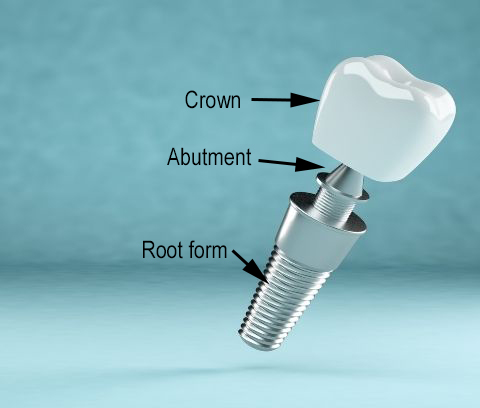
Dental implant components, including root form, abutment, and crown

Dental implants imitate natural teeth

Dental implants are artificial tooth roots. Your implant dentist will attach a connector (abutment) to each implant fixture. And after three to four months of healing, your dentist will attach artificial teeth to the abutments. Meanwhile, you can wear temporary replacement teeth.

Types of artificial teeth, also called prostheses or restorations, include:

  • Crowns
  • Bridges
  • Dentures

What Is the Lifespan of a Dental Implant Restoration?

Dental implant crowns, bridges, and dentures can last longer than restorations not attached to implants. Estimates for their lifespan are below:

  • Implant crown – An implant crown can last up to fifteen years if you take care of it. Gold crowns are sturdy and last longer than ceramic crowns.
  • Implant bridge – An implant bridge can last up to twenty years before you need to replace it.
  • Implant denture – A well-made implant denture can last ten years or longer.

What Can You Do to Help Your Dental Implants Last?

Your dental implants can be permanent if you take precautions. Your choice of an implant dentist and diligent home care make a difference.

Below are five tips, including several recommendations from the American Academy of Implant Dentistry for protecting your implants:

  1. Choose an implant dentist or surgeon who uses 3-D x-rays for planning implant placement
  2. Avoid tobacco use because it hinders healing
  3. Avoid alcohol
  4. Practice good oral hygiene
  5. Maintain good overall health

Summary

The artificial root of a dental implant can last a lifetime. But you will need to replace the dental crown, bridge, or denture attached to the implants over the years. Select your implant surgeon wisely. And take good care of your implants to help them be a permanent form of tooth replacement.


Dr. Steven Brookser, a Fellow of implant dentistry in Baton Rouge, sponsors this post.
Filed Under: Dental Implants Tagged With: alcohol dental implants, are dental implants permanent, how long do dental implants last, how to make dental implants last longer, implant abutment, implant bridge, implant crown, implant denture, tobacco dental implants, what affects how long dental implants last, what are the parts of a dental implant

How Long Can I Delay Root Canal Treatment?

Posted on September 27, 2021 by AllSmiles.

For the past two months, I have had cheek and jaw pain from an upper right tooth in front of where my wisdom tooth was. My sinuses and noes are achy, too. Late last week, I woke up with a sore neck, and that pain radiates into my right ear and temple. I’ve been taking antibiotics until I can afford to see a dentist. I cannot afford a root canal and certainly not a dental implant. My dental coverage only covers routine exams and cleaning. Could all these symptoms be related to my tooth? I am afraid that I will lose my tooth. I know your doctor has not seen me, but how much longer can I wait? Thank you. Joziah from TN

Joziah,

We are glad that you asked the question! You cannot afford to wait any longer. You are describing a tooth infection that is spreading. If you act quickly, a dentist might be able to save your tooth with root canal treatment. Otherwise, a dentist might need to remove the tooth.

What If You Cannot Afford a Root Canal?

If you cannot afford root canal treatment, look online for a nearby university dental school, a dental clinic, or a local dental society. Any of those organizations can direct you to dentists who treat patients that require prompt, serious care.

If you go to a hospital emergency room or an urgent care facility, they may give you pain medication or a more potent antibiotic. But eventually, you must see a dentist for root canal treatment even if you do not have dental insurance.

Are Antibiotics Enough to Treat a Tooth Infection?

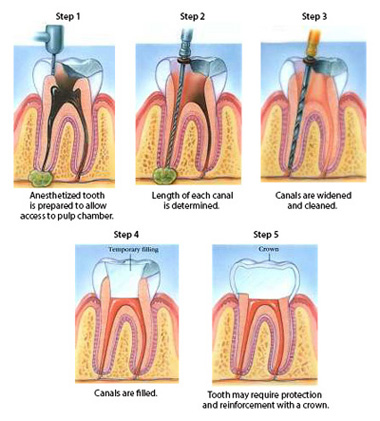
Diagram of root canal treatment instead of a dental implant - from Baton Rouge denitst Steven Brooksher, DDS

The root canal process can be an alternative to tooth removal and a dental implant

Continually taking antibiotics for tooth infection can promote an antibiotic-resistant infection that becomes worse. The American Dental Association confirms that the infection can even spread without root canal treatment into the bone supporting the tooth.

The only way to treat an infected tooth is with a root canal procedure or tooth removal. A dentist will not recommend a dental implant knowing that you cannot afford it. Please do not let the cost of treatment prevent you from getting help.

Steven Brooksher, DDS of Baton Rouge, sponsors this post. Dr. Brooker is a Fellow of the International Congress of Oral Implantologists.

Filed Under: Dental Implants Tagged With: antibiotics tooth infection, cannot afford a dentist, cannot afford root canal, do dental schools do free care, emergency root canal, find a dental clinic, how long delay root canal, how to find free dental care, root canal vs dental implant, root canal vs extraction

My new dental crown keeps coming off

Posted on July 31, 2021 by AllSmiles.

After my dentist replaced my 15-year-old crown over a root canal tooth, the crown will not stay on. My dentist has reattached the crown four times since March. That’s like once a month. Why did the old crown stay on, but the new one will not stay in place? If this becomes a problem, will my dentist need to extract the tooth and place a dental implant? Thank you. Sienna

Sienna,

Thank you for your question.

A crown can continually detach if it doesn’t have enough tooth structure to help it stay in place. But your dentist—or another dentist—can take steps to keep it in place.

Securing a dental crown that keeps coming off

If your dental crown keeps coming off, it is probably due to stress on the tooth as you bite, tear, chew, or grind—depending on the tooth position. If the problem is due to a lack of tooth structure left, your dentist can take these steps:

  • Remove some of the root canal filler material
  • Cement a flexible fiberglass post about 2/3 deep into the tooth
  • Fill in the tooth with bonding

The process bonds the tooth into the canal and builds up a core material around your tooth. The dentist will shape the bonding to look like a natural tooth after preparing it for root canal treatment.

Afterward, your tooth will hold the crown easily. You can suggest this process to your dentist. If your dentist is hesitant about treating your tooth, we suggest scheduling a consultation with an advanced cosmetic dentist.

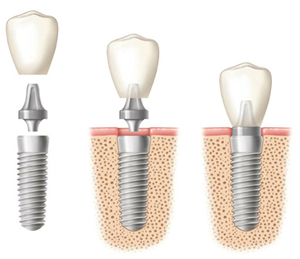
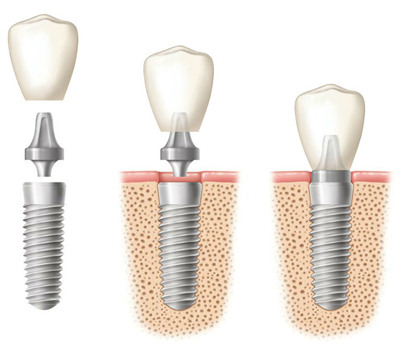
Diagram of the phases of a dental implant for a comparison to a partial denture.

Saving your tooth is the priority over a dental implant.

Saving your tooth is the priority. Although a dental implant is almost effective as a natural tooth, preserving your natural tooth is the priority.  If any dentist recommends tooth extraction and a dental implant, it should be after an attempt to save your tooth with a post.


Steven Brooksher, DDS of Baton Rouge, sponsors this post. Dr. Brooker is a Fellow of the International Congress of Oral Implantologists.

Filed Under: Dental Implants Tagged With: dental crown comes off, fiberglass post for tooth, little tooth left for a crown, no tooth structure for a crown, prepare tooth for a crown

No pain in my canine root canal tooth, but my dentist recommends a crown

Posted on July 22, 2021 by AllSmiles.

In 2002, I had a root canal on a canine tooth. My dentist of 3 years suggests putting a crown over the tooth to prevent it from breaking. The tooth does not hurt, so I asked my dentist if something is visibly wrong with the tooth. He said no, but the crown is preventive care. Do I need a crown on the tooth? I do not want to refuse treatment and end up with extraction and dental implant. Thank you. Leland from GA


Leland,

Thank you for your question.

Root canal weakens a tooth and increases the risk of breaking. But differences between molar teeth and front teeth causes some cosmetic dentists to avoid placing crowns on front root canal teeth.

  • Molar teeth – The stress of biting and chewing pushes the four cusps (the biting points) of molar teeth apart. The teeth are at risk of breaking after root canal treatment.
  • Front teeth – Designed for biting and tearing, front teeth are affected by horizontal shearing stress. Canine teeth absorb horizontal pressure to protect molar teeth. The long roots of canine teeth help them absorb stress.

Does a Canine Root Canal Tooth Need a Crown?

Unless your canine root canal tooth is already missing most of its structure, you do not need a crown. Additionally, a dentist may recommend a crown if the tooth is dark or poorly shaped and detracting from your smile.

Diagram of the phases of a dental implant for a comparison to a partial denture.

If your canine root canal tooth is weak, a skilled dentist can reinforce it and hopefully prevent the need for a dental implant

Shaving a canine tooth for a crown requires reducing about one millimeter of tooth structure all around the tooth. The tooth may be left with as little as 50% of its initial fracture resistance.

Many cosmetic dentists strengthen canine teeth by placing a flexible fiberglass post in the tooth and filling in the tooth with composite. This process can protect the tooth from stress and minimize dark discoloration after root canal treatment. The added strength of a fiberglass post helps prevent breakage and the need for tooth replacement options, such as a dental implant.

You can get a second opinion from a cosmetic dentist to see if your tooth is weak and needs a post to support it.


Steven Brooksher, DDS of Baton Rouge, sponsors this post.

Filed Under: Dental Implants Tagged With: canine root canal tooth crown, canine tooth post, crown and post tooth, crown rooth canal tooth, dental implant, dental implant canine tooth, post only tooth, reinforce canine tooth, root canal

Odor from new dental implants annoys my multiple chemical sensitivity

Posted on June 13, 2021 by AllSmiles.

I have multiple chemical sensitivities and never anticipated a problem with dental implants. I am in the middle of dental implants and wearing temporary dentures. But when I open my mouth to talk or eat, I smell a distinct rubbery smell. I asked my dentist about the implants. And it was everything I  know already. The implants are titanium, the temporary denture is acrylic, and my final teeth will be porcelain. But I was not expecting a chemical smell. My dentist says that the odor is probably coming from my acrylic teeth and will go away when I get my final denture. But the strong smell is annoying. Will the scent really go away? – Thank you. Daniella


Daniella,

Thank you for your question. Although Dr. Brooksher would need to examine your implants and temporary dentures, several elements could be causing the odor.

Odor with New Dental Implants

We will discuss whether titanium posts, temporary acrylic teeth, or food debris can create an odor in new dental implants.

New titanium dental implants and odor

A dentist embeds titanium implants in your bone. They are beneath the gumline, so they are unlikely to produce an odor that you can smell. You can ask your dentist to let you smell an implant like the one he placed in your bone. But if titanium posts must be replaced, your dentist or an oral surgeon must remove the implants surgically. Afterward, you need bone grafting. And after the bone heals, your dentist must make new implant holes for zirconia implants.

Acrylic implant denture and odor

Acrylic has a slight smell, so the odor from your implant denture may be coming from the denture itself. If that is the case, it will probably resolve when your dentist places your new denture.

Odor from food debris

I food debris collects in your mouth—perhaps beneath your temporary denture, you could be smiling it. You may benefit from a water flosser to clean beneath your denture. You can also rinse your mouth with hydrogen peroxide to clean out food debris and neutralize odor. But do not use peroxide for more than two or three weeks because it will promote an oral yeast infection.

Does the odor cause a reaction?

You mentioned that the strong smell is annoying, but we wonder if it causes a sensitivity reaction. Does it make you tired or cause a reaction that you usually get with strong smells? Your answer is another clue to the source of the odor.

Consider getting a dental implants second opinion

If the odor causes a reaction and your dentist cannot identify the source, you can consider getting a second opinion from a skilled implant dentist.


Dr. Steven Brooksher, DDS of Baton Rouge, a Fellow of the International Congress of Oral Implantologists.

Filed Under: Dental Implants Tagged With: Baton Rouge International Congress Oral Implantologists, chemical sensitivity dental implants, chemical sensitivity dentist, chemical sensitiviy dental materials, dental implant allergy, dental implants removed, do dental implants smell, International Congress Oral Implantologists Baton Rouge, replace titanium dental implants with zirconia, second opinion dental implants

Can a dark tooth be saved?

Posted on May 15, 2021 by AllSmiles.

Last year I fell during my morning run and fractured my right front tooth, and now the tooth is dark. My dentist did a root canal on the tooth, so I wasn’t expecting it to turn dark. My dentist didn’t mention that I should expect it either. I had an exam two weeks ago, and my dentist explained that sometimes root canal teeth turn dark. How do I know that the tooth is not decaying and that I will eventually need a dental implant? My dentist says she can put a veneer over the tooth. I don’t want to say that I do not trust my dentist, but I am skeptical because she didn’t warn me that it might turn dark. Although my smile is not perfect, I like it. And people compliment my smile. Should I be concerned about my dark tooth, or is it okay to proceed with a porcelain veneer? And what if the veneer doesn’t match my other teeth? Thank you – Emery, from Jackson, MS


Emery,

Although Dr. Brooksher would need to examine your tooth for an accurate diagnosis, a porcelain veneer can conceal a dark tooth.

Why Does a Tooth Turn Dark After Root Canal Treatment?

Diagram of the phases of a dental implant for a comparison to a partial denture.

An extraction and dental implant are not necessary for a dark tooth

A tooth turns dark after root canal treatment due to dentin (the layer beneath the enamel) staining or leftover root canal filler material.

  • Dentin stain – When the pulp—living tissue, nerves, and blood vessels—inside your tooth dies, it can stain the dentin. And dentin is the layer beneath your tooth enamel. If a dentist does not thoroughly clean out the infected tooth pulp during root canal treatment, it will stain the dentin and how through your tooth.
  • Leftover root canal filler material – Some root canal filler materials accelerate tooth darkness if a dentist leaves the material in the tooth crown. But a skilled cosmetic dentist knows to clean filler material to slow the darkening process.

Treatment for a Dark Root Canal Tooth

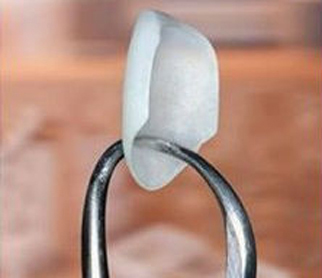
Photo of the tip of dental forceps holding a single porcelain veneer; from the Baton Rouge office of accredited cosmetic dentist Dr. Steven Brooksher.

A single porcelain veneer can conceal a dark tooth

Internal bleaching will lighten a dark root canal tooth. After bleaching, a cosmetic dentist will work with a skilled ceramist to craft a porcelain veneer that perfectly matches the characteristics and color of your natural teeth.

Unless you have an advanced tooth infection or new trauma to the tooth, your dentist should not suggest aggressive treatment. Instead, a dentist will recommend a dental implant if they or an endodontist (root canal specialist) cannot save your tooth.

Get a Second Opinion for Your Dark Tooth

If your dentist does not have advanced cosmetic dentistry training, you can check the credentials of a few cosmetic dentists in your area. Schedule a consultation with one or two cosmetics to discuss your options for whitening your dark tooth.

Steven Brooksher, DDS, an accredited cosmetic dentist in Baton Rouge, sponsors this post.
Filed Under: Dental Implants Tagged With: dark tooth, dark tooth dental implant, dark tooth porcelain veneer, dark tooth root canal, dark tooth second opinion, dental implant, why does a tooth turn dark

I want this stainless-steel post out of my tooth

Posted on March 26, 2021 by AllSmiles.

I knew my dentist was going to insert a post into my root canal tooth (lower molar), but I didn’t think to ask what the post was made of. I found out today that the post is stainless steel. I am wearing a temporary crown and will get the final crown in about two weeks. My dentist explained that the stainless-steel post will be encased, but can it be removed and replaced with a non-metal post? If there is no other way to save the tooth, I would rather have an extraction. I’m really concerned about getting this post out of my mouth. I think I am having a reaction to it, and it is making my ears ring. – Thank you. Alex from S. Carolina

Alex,

Thank you for submitting your question to our office.

Although a dentist can remove a stainless-steel post from your tooth, there are risks.

Purpose of a post in a tooth

A dentist might insert a post in a root canal to strengthen the tooth or support a crown. The post can be useful in these situations:

  • Front teeth – A post strengthens the tooth against horizontal fracture.
  • Molar and other teeth – The post can serve as the foundation for building up the tooth and retaining the crown.

History of tooth posts

In the 1970s and earlier, prefabricated dental posts were made of stainless steel. In the 1980s, studies confirmed that metal ions can seep out of the tooth and into the bloodstream—even though the post is cemented inside the tooth. The nickel in stainless steel often causes a reaction in people with metal allergies or sensitivities.

Alternative materials for dental posts

Alternative materials for dental posts include titanium, zirconia, carbon fiber, and fiberglass. Titanium is a strong, biocompatible metal that many dental practices used. And in the 1990s, other materials, including carbon fiber and fiberglass were used to make dental posts. Now, the ceramic zirconia is an alternative for a biocompatible, flexible high-strength post.

If you have metal allergies or sensitivities, a dentist can remove your post. But it seems that your dentist is not the one to do it. The complexity of removing the post depends on how deeply your dentist embedded it and how firmly it is cemented. A skilled dentist might use an ultrasonic tip to dislodge it.

Get a second opinion

Diagram of the phases of a dental implant for a comparison to a partial denture.

Get a second opinion to preserve your tooth instead of needing an extraction and implant

You can ask your dentist to postpone your dental crown until the post is removed. If a crown is cemented over the post, it will become more difficult to remove it. Although Dr. Brooksher would need to examine your tooth, your description does not suggest that you might require an extraction and dental implant. We recommend that you schedule an appointment with a skilled dentist for a second opinion. After examining your tooth, the dentist will explain your treatment option.

Best wishes for a prompt resolution.


Steven Brooksher, DDS, of Baton Rouge, sponsors this post.


Filed Under: Dental Implants Tagged With: dental crown second opinion, dental implants, dental post, metal dental post, non-metal dental post, post and crown, stainless steel dental post, types of dental post, why put a post in a tooth

My painful dental implant and bone graft failed

Posted on February 24, 2021 by AllSmiles.

My dentist has placed hundreds of dental implants in the past 15 years. I know friends and two family members who received implants from him with no problem. Before doing my implant, my dentist told me that I would need a bone graft first. After healing, he placed the bone graft. But I was in so much pain, he removed it and said the bone was not built up enough, so I could not get an implant. Now my dentist recommends a bridge. I do not want a dental bridge. Although my dentist has placed many implants, I wonder if I should switch to a specialist. Is it worth it, or am I wasting time and money? Thank you. Dylan

Dylan,

Although Dr. Brooksher would need to examine your implant site for an accurate diagnosis, we doubt that a dentist with advanced implant training would have the same problems as your dentist. It sounds like your dentist is trying to give you a solution that he can confidently complete.

How much pain should dental implants cause?

With dental implants, you will not feel pain during surgery. Afterward, most patients feel mild pain and discomfort that is temporary and mild.

  • During – Before implant surgery, your dentist will sedate you, and local anesthesia will numb the implant site. You will not feel pain during surgery.
  • After – Initial pain after dental implant surgery is normal, but it peaks in a few days and continues to improve. And you will take anti-inflammatory and pain medication to minimize the pain.

But bone grafting can be complex. Although your dentist placed hundreds of implants, bone grafting might be challenging for him—or maybe he doesn’t have much experience with grafting. Unfortunately for you as the patient, a dentist exploring new skills like bone grafting may have difficulty with a case.

On a positive note, your dentist could have left the implant in place and let it develop complications before removing it, so his choice to remove it was wise and considerate.

A dental bridge instead of an implant?

Diagram of the phases of a dental implant for a comparison to a partial denture.

Advanced implant dentists understand bone grafting and implant surgery

You have decided to get a dental implant—not a dental bridge as your dentist has offered. Although a dental bridge is an acceptable form of tooth replacement, if you want the implant, go for it. We recommend that you schedule a consultation with a dentist with advanced implantology training. You can ask your dentist to transfer copies of your x-rays and CT scans or take copies with you. The potential new dentist will explain your treatment options and how they will complete the bone graft and place the implant.

Best wishes on your next experience with dental implants. Take time to check the implant dentist’s credentials first.

Steven Brooksher, DDS of Baton Rouge, sponsors this post. Dr. Brooksher is a Fellow of the International Congress of Oral Implantologists.

Filed Under: Dental Implants Tagged With: advaned implant training dentist, Baton Rouge ICOI implant dentist, Baton Rouge International Congress Oral Implantologists, dental bridge vs implant, dental implant bone graft failed, dental implant failed, dental mplant removed, do dental implants hurt, how much pain dental implants, implant dentist, implant dentist fellow Baton Rouge, Implant dentist graduate Baton Rouge, Lousiaina implant dentist

My permanent teeth grew behind the primary ones

Posted on February 14, 2021 by AllSmiles.

Three of my upper adult teeth grew behind my primary teeth. It has been this way for years.  I’m 24 years old, and now that I have employment and dental coverage, maybe I can afford to get this corrected. Are braces enough, or will I need something more complex? I guess that I will need extractions, too (?) Thank you. Morgan from TN

Morgan,

Although Dr. Brooksher would need to examine your teeth for an accurate diagnosis, your description sounds like orthodontics can correct the issue.

When Adult Teeth Grown Behind Primary Teeth

When adult teeth grow behind primary teeth, a dentist or orthodontist will extract the primary teeth. If your teeth are crowded overall, your dentist may recommend removing some permanent teeth to make room for proper alignment.

When a Primary Tooth Will Not Come Out

If a permanent tooth appears but the primary tooth will not automatically come out, a dentist may remove it. Removing the primary tooth makes room for the permanent one and helps it develop in the correct position. If you would still need orthodontic treatment in the future, removing the tooth will simplify treatment with braces.

Upper lateral incisor

Diagram of the phases of a dental implant for a comparison to a partial denture.

After braces, a dental implant can replace a missing primary tooth

Upper canine teeth often displace lateral incisors. After orthodontic treatment, a dentist may recommend dental implants to replace the missing lateral incisors.

Lower premolar

If you have a congenitally missing, lower premolar, your dentist may choose to keep the primary tooth if its position is good and it does not interfere with your bit. The dentist will watch the tooth and maintain it with fillings or other treatment as needed.

Depending on each patient’s case, after orthodontic treatment, a dentist might recommend a dental implant to fill in the space of a missing tooth.


Steven Brooksher, DDS, of Baton Rouge, sponsors this post.

Filed Under: Dental Implants Tagged With: dental implant ater orthodontics, missing canine, missing incisor, missing premolar, permanent teeth behind baby teeth, permanent teeth will not erupt, primary teeth will not fall out

Pain after root canal treatment got better then worse

Posted on January 30, 2021 by AllSmiles.

After getting a second root canal on my tooth, the pain came back a few days later. I called my dentist, and she said my tooth should be fine. I read online that after root canal treatment, peak inflammation and pain can occur for 48 to 72 hours but should improve. The hygienist at my dentist’s office is a good friend of mine, so I called her yesterday, and she said that the pain returning can mean that the second root canal failed. I hate to take a hygienist’s word over my dentists, so I decided to write for a tiebreaker. I know that I will need to see my dentist again, but which prognosis seems correct? I am concerned about losing the tooth and needing a dental implant – Sareda from Knoxville, TN

Sareda,

Peak inflammation after root canal treatment occurs in the following 48-72 hours if a dentist does not treat the pain by reducing the occlusion (the way your upper and lower teeth fit together). Inflammation can cause post-operative pain that hurts right away, peaks, then improves. When the local anesthetic wears off, an untreated tooth feels worse the second and perhaps third day before improving.

When root canal post-operative pain improves, then returns

If you experience peak pain on day two or three, but it improves and begins to hurt again, it can be a sign of post-operative infection. But not every case of post-operative pain is a sign of root canal failure.

  • The risk of root canal failure increases in a tooth with two or more root canal treatments.
  • If a tooth had a repeat root canal treatment and you have passed the peak pain period (48-72 hours), but the pain returns, it is often a sign of root canal failure.
  • The American Association of Endodontics advises that if severe pain or pressure lasts for more than a few days, you should contact your endodontist.
Diagram of the phases of a dental implant for a comparison to a partial denture.

A dental implant can replace a tooth after root canal failure and extraction

Please schedule a follow-up appointment with your dentist. If your dentist’s response is unsatisfactory, we recommend that you get an exam from an endodontist (root canal specialist). When root canal treatment fails, an endodontist might recommend root canal surgery by making an incision in the root tip to treat the tooth. If you want to avoid tooth extraction and a dental implant and your dentist cannot resolve the issue, an endodontist or a dentist with advanced implantology training will give you the best chance at saving a problem tooth.

For information about how to avoid implant failure, read our post: My painful dental implant and bone graft failed

Steven Brooksher, DDS, of Baton Rouge, sponsors this post.

Filed Under: Dental Implants Tagged With: dental implant, extraction dental implant, pressure after root canal, root canal failure, root canal pain worse, root canal post-op pain, root canal treatment, severe pain after root canal

  • « Previous Page
  • 1
  • 2
  • 3
  • 4
  • 5
  • Next Page »
Dr. Steven Brooksher, DDS., LLC
Meet
Dr. Brooksher

Dr. Brooksher is a past winner in the International Smile Gallery competition of the American Academy of Cosmetic Dentistry.

Meet Dr. Brooksher
Dr. Brooksher Smile Gallery
Gallery
of Smiles

Can you imagine yourself with one of these beautiful new smiles?

See the Gallery

Reviews

Slide 1

“I have horrible anxiety at dental offices. I have never been as comfortable as I am at Dr. Brooksher’s office. Everyone is really nice, accommodating, and understanding!”

Jay Alex

Slide 1 - copy

“Dr. Brooksher is humble, kind, funny, and easy to get along with. His staff is friendly, too! I have the utmost respect for his work. I've never been this comfortable going to the dentist.”

Christopher Jeffers

Slide 1 - copy - copy

“Dr. Brooksher came highly recommended by so many of my present and former coworkers. I've had fear of the dentist all my life and finally got the courage to go. I can now say for myself that he is the best—hands down.”

Patricia Madison Anthony

Slide 1 - copy - copy - copy

“Sometimes I feel that Dr. Brooksher and his staff care more about my teeth than I do. They are professional and prompt, so definitely be on time for your appointment!”

Brock George

Slide 1 - copy - copy - copy - copy

“I’ve been a patient at Dentistry by Brooksher for more than 15 years. They are always thorough and professional. Dr. Brooksher explains your options and the best treatment plans. He and his staff are a pleasure to deal with.”

Wilson Alvarez

contact
Map Too Brooksher Dental Office
Steven H. Brooksher, DDS, AAACD, FICOI
1010 South Acadian Thruway
Ste A
Baton Rouge, LA 70806

OFFICE HOURS Mon - 8:00 am - 5:00 pm
Tuesday - 7:00 am - 3:00 pm
Wed - 8:00 am - 5:00 pm
Thurs - 7:00 am - 3:00 pm

PHONE (225) 346-8625

Request an
Appointment
Dr. Steven Brooksher, DDS.
Address: Steven H. Brooksher, D.D.S., LLC
1010 South Acadian Thruway, Ste A
Baton Rouge, LA 70806
Phone: (225) 346-8625
Pay Online
REVIEW ME:
Office Hours: Mon - 8:00 am - 5:00 pm
Tuesday - 7:00 am - 3:00 pm
Wed - 8:00 am - 5:00 pm
Thurs - 7:00 am - 3:00 pm
  • Best Dentist in Baton Rouge
  • Blog
  • Baton Rouge Lumineers
  • Privacy Policy

©2015-2026 Steven H. Brooksher, D.D.S., LLC | Doing Business As: Dentistry By Brooksher • All rights reserved •

Website Design and SEO by Infinity Dental WebIDW logo

Mobile Menu Icon Dr. Steven Brooksher, DDS.
  • Home
  • About Us
    • Meet Dr. Brooksher
    • Meet Our Team
    • Your First Visit
    • Contact Us
    • What Makes Us Different?
    • Patient Forms
    • Financial Policies
    • Pay Online
    • Request an Appointment
  • Cosmetic Dentistry
    • Cosmetic Dentistry
    • Smile Gallery
    • Porcelain Veneers
    • Dental Bonding
    • Teeth Whitening
    • Smile Makeover
    • SmileFy Smile Design
    • Porcelain Crowns
  • Tooth Replacement
    • Dental Implants
    • Dental Implant Hybrids
    • Implant Overdentures
    • Dentures
  • Sedation
  • Other
    • Emergency Dentist
    • Metal-Free Dentist
    • Porcelain Crowns
    • TMJ Treatment