Dr. Steven Brooksher, DDS
Address: 1010 South Acadian Thruway, Ste. A, Baton Rouge, LA 70806
  • Home
  • About Us
    • Meet Dr. Brooksher
    • Meet Our Team
    • Your First Visit
    • Contact Us
    • What Makes Us Different?
    • Patient Forms
    • Financial Policies
    • Pay Online
    • Request an Appointment
  • Cosmetic Dentistry
    • Cosmetic Dentistry
    • Smile Gallery
    • Porcelain Veneers
    • Dental Bonding
    • Teeth Whitening
    • Smile Makeover
    • SmileFy Smile Design
    • Porcelain Crowns
Call us: (225) 346-8625
  • Tooth Replacement
    • Dental Implants
    • Dental Implant Hybrids
    • Implant Overdentures
    • Dentures
  • Sedation
  • Other
    • Emergency Dentist
    • Metal-Free Dentist
    • Porcelain Crowns
    • TMJ Treatment
Life-changing dentistry

Complete dental care, from checkups and cleanings to complex restorative dentistry and life-changing smile makeovers.

Request an
Appointment

My Dental Crown Feels Weird When I Chew

Posted on April 15, 2022 by AllSmiles.

My dentist placed a crown on an upper left molar three weeks ago. The tooth touches the opposite bottom molar tooth when I chew, but it feels off. I think the crown needs deeper grooves so the other tooth will match it when I chew. If I ask my dentist to drill down some of the crown’s surface, will it damage it? Although I will need laughing gas or another sedation to cope with my anxiety and get through this, I want it resolved. I already told my dentist about the discomfort, and she said that I need time to get used to my bite. How long will that take? Thanks. Randall from Memphis

Randall,

Your dentist’s request to give your concerns more time means that she does not know what to do. Brooksher would need to examine your tooth and crown to determine what is causing the disharmony when you chew. But the situation could be challenging to correct, or your dentist’s lack of knowledge might be the problem.

Your bite should be perfectly comfortable when you receive a new crown or onlay. But the motions involved in chewing make the occlusion—how the upper and lower teeth fit together—complex. And many dentists lack the training and skill to resolve the issue.

Post-graduate institutes, including the Las Vegas Institute for Advanced Dental Studies, the Texas Center for Occlusal Studies, the Dawson Academy, the Pankey Institute, and others, train dentists in the science of occlusion. Many cosmetic dentists attend the institutes or receive courses from other organizations that teach the same principles. Still, many other dentists feel that basic dental school education is enough, and they do not need occlusion training. Although dentists who bypass additional training might complete single crowns or onlays, they may not be qualified to complete a full-mouth reconstruction with a balanced bite. So, as a patient, a dentist may tell you that it takes time to get used to your bite.

What Is Malocclusion and What Problems Can It Cause?

Malocclusion is the term for disharmony in how your upper and lower teeth line up. The shape, size, or position of your jaw or teeth may cause malocclusion, or misaligned teeth. The shape and size of a dental crown can affect your bite. Although you might adjust to how your bite feels, it does not mean it is aligned correctly. And malocclusion can lead to other issues.

  • Unusual stress on teeth – The stress can lead to bone loss around the affected teeth.
  • TMJ disorder – You might experience symptoms or signs related to TMJ, including jaw, facial, or neck pain, and headaches or earaches.

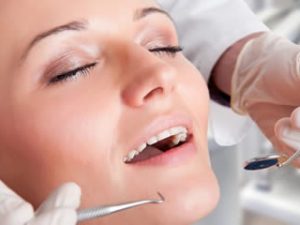
Face of a woman relaxed during dental treatment for information on sedation dentistry from Dr. Brooksher of Baton RougeMany dentists adjust a new crown or onlay by asking you to bite on bite registration paper. The paper leaves marks where the crown or onlay makes contact prematurely. The dentist will grind down the crown in those places. Your dentist has completed that essential step, and your crown is not high.

The issue with your bite is more subtle. But a dentist—perhaps not your dentist—can adjust the crown to make it comfortable without damaging it. If your dentist does not know how to correct it, you can wait a few months to see if the tooth begins to feel better with your bite. Or you can get a second opinion from an advanced cosmetic dentist. Look on a few dentists’ websites for information about post-graduate training in occlusion from one of the institutes mentioned on this page. You can talk to the dentist about your anxiety and discuss sedation options during your consultation.

Baton Rouge dentist Dr. Steven Brooksher sponsors this post.

Filed Under: Sedation Dentistry Tagged With: adjust bite crown, dental crown feels weird, malocclusion, replace crown, second opinion crowns, sedation dentist, stress on teeth, tmj

How Does Lupus Affect Your Teeth?

Posted on February 28, 2022 by AllSmiles.

Young African American woman portraying concern over lupus and oral healthI was diagnosed with lupus two months ago. I have a friend who was diagnosed over 20 years ago. She says that lupus can affect your teeth. I haven’t been one to be regular at any dentist because of my anxiety. But I know I need to rethink it all. What kind of changes should I look for in my teeth now that I have lupus? – Krista

Krista- Thank you for your question.

According to a 2019 article in the dental journal, Oral Diseases, studies show that people with systematic lupus have a greater risk of “compromised oral and dental health exhibiting increased risk of periodontal diseases and temporomandibular joint disorders.” So, how does lupus affect your teeth?

How Does Lupus Affect Your Teeth?

Lupus can affect your teeth and jawbone health, salivary glands, and increase tooth decay. We will explain:

  • Jaw joint health – Lupus often affects joints in the body. The temporomandibular joint, which connects the jawbone to the skull, can be affected. Temporomandibular joint disorder (TMJ) can result from chronic inflammation of the joints that lupus can cause.
  • Salivary glands – Auto-immune conditions, including lupus, can attack the body’s moisture-producing glands, including salivary glands. A reduction in saliva flow in the mouth increases acid.
  • Tooth decay – Tooth decay increases when acid attacks your teeth. In severe cases of decay, a cosmetic dentist can protect and restore your teeth.
  • Mouth sores – Additionally, many medications prescribed to treat lupus can cause mouth sores.

Maintaining Your Oral Health with Lupus

It is an excellent time to start seeing a dentist for regular exams and cleanings. Let your dentist know that you have lupus. They will monitor your teeth and gums for signs of dryness. If you experience dry mouth, your dentist can recommend at-home care or prescription remedies to assist with saliva production.

Please do not let your anxiety keep you away from the dentist. Schedule a consultation with an experienced dentist to discuss your options for treatment along with sedation to help you relax.

Baton Rouge dentist Dr. Steven Brooksher sponsors this post.

Filed Under: Sedation Dentistry Tagged With: dental sedation lupus, dental sedatoin, lupus afraid of dentist, lupus mouth sores, lupus oral health, lupus salivary gland, lupus teeth, lupus tmj

Why Is My Palateless Denture Loose?

Posted on January 31, 2022 by AllSmiles.

Last August, I found a dentist who does palateless dentures. He took some x-rays, reviewed my medical records, and said I could get the denture. I was excited because I have worn dentures for 20 years. I was very nervous because I had never had any oral surgery before last September when the dentist did four implants. I was under IV sedation, so the surgery went better than expected. Everything seemed to go okay until mid-January, when I felt something shift in my mouth. I returned to the dentist before my next scheduled appointment. He said that the denture might be loose, and he will check the implants next week. I am terrified of what the dentist might find and that I might lose all the implants. I don’t know if my anxiety will let me start all over again. Now, my trust level is down. What are some reasons that my palateless denture might be loose? – Thanks so much. Giada from Florida

Giada,

Thank you for your question. Dr. Brooksher would need to examine your denture and take a 3-D cone beam CT scan to identify the problem. But will explain some possible causes of your loose palateless dentures. But first, we will explain how a palateless denture works for any of our readers who are not familiar with it.

What Is a Palateless Denture?

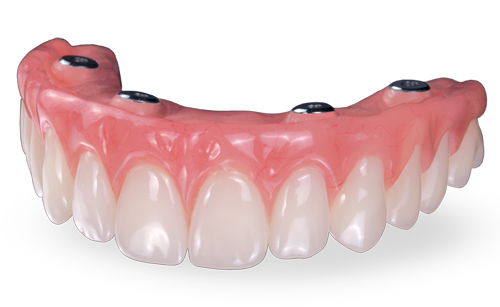
Palateless upper denture prepared for dental implantsA palateless is shaped like an arch and has no upper plate that touches the roof of your mouth. A palateless implant denture snaps or screws onto dental implants. Dental implants are tiny screws that an implant dentist places in your jawbone. Two to six implants can keep your denture in place. After about four months of healing, your dentist will attach the final denture to the implants.

Palateless implant denture vs. traditional implant denture

  • Traditional denture – A traditional denture has a palate that touches the roof of your mouth. Suction from the top of your mouth keeps the denture in place. Many denture wearers find it uncomfortable. Some also say that it distorts the taste of food.
  • Palateless implant denture – Dental implants embedded in your jawbone can support a palateless denture. You will have a more comfortable experience wearing dentures that do not cup the roof of your mouth.

Why Is Your Palateless Denture Loose?

If your palateless implant denture is loose, perhaps the denture is not secured to the implants. Or, your implants and jawbone may not have fused. An examination and 3-D CT scan will provide the answer.

  • Denture not secured to the implants – If your palateless denture is loose, your dentist must determine the cause. Perhaps the denture base is misaligned with the implants. Or, maybe the connection between your denture and implants is unstable.
  • Jawbone and dental implant did not fuse – When your jawbone and implant do not fuse, the cause could be the location of the implants, inflammation around the implants, poor-quality implants, or other factors.

Get a Second Opinion Right Away

We recommend getting a second opinion right away. The American Society of Implant and Reconstructive dentistry cautions that if the implant connection is loose, it can have these effects:

  • Alter your bite (the way your upper and lower teeth meet when you close your mouth)
  • Damage the implants
  • Cause bone loss

You mentioned that your dentist took some x-rays, but you did not say a 3-D cone beam CT scan. Did your implant dentist complete that scan? Search for an implant dentist with credentials (not membership only) from the International Congress of Oral Implantologists or the American Dental Implant Association. Schedule an appointment for a second opinion. You will need a comprehensive exam and a 3-D CT scan at some point.

Your anxiety is understandable, but an implant dentist will recommend sedation options to keep you relaxed while getting the care you need. We wish you a healthy resolution for your loose palateless denture.


Dr. Steven Brooksher of Baton Rouge, Louisiana, sponsors this post. Dr. Brooker is a Fellow of the International Congress of Oral Implantologists.

Filed Under: Sedation Dentistry Tagged With: dental implants, implant overdenture, loose implant denture, loose implant overdenture, loose palateless denture, palateless denture, palateless implant denture, second opinion implant denture, second opinion loose dental implants, second opinon loose implant denture, sedation dental implants, what is a palateless denture

Never Had Issues Like This Until I Got a Dental Implant

Posted on January 17, 2022 by AllSmiles.

I lost my right second molar at age 17 and never replaced it. As an adult, I decided to do something about it. I wore a partial denture for many years, and now at age 47, I have decided to get an implant.  But I regret it because I never had dental issues like this until I got the implant.

After implant surgery, my dentist told me that he placed the implant, although my bone level was shallow. He said that if it didn’t work out, he could do a bridge instead. I was furious, and after four months, my dentist said the implant was not healing well. I had a lot of anxiety about getting an implant, and it is increasing because someone must remove the implant. But I refuse to get a bridge. I would rather leave the space empty. I’m writing out of frustration but unsure of what question to ask. – Thank you. Marcus from KY

Marcus,

Thank you for contacting our office. We understand that you must be frustrated.

Do You Have Enough Bone Volume for a Dental Implant?

Whether you have enough bone level for a dental implant is something that any responsible implant dentist determines before surgery. Implant dentists take a 3-D digital CT scan before recommending implants. The scan helps your dentist identify:

  • Bone level
  • Oral anatomy
  • Best implant location

We are also concerned because if you have had a missing tooth for 30 years, your dentist knows that you have experienced significant bone shrinkage.

How Much Does Bone Shrink When a Tooth Is Missing?

When a tooth is missing, bone shrinkage progresses rapidly. If your dentist takes a 3-D CT scan before placing an implant, they will notice the shrinkage and determine if you need bone grafting. An article published by the American Academy of Implant Dentistry on how missing teeth affect your bone notes that when you have a missing tooth, bone shrinkage occurs at these rates:

  • 25 percent in three months
  • Up to 50 percent in six months

How to Deal with Poor Implant Dentistry

When you are a victim of poor implant dentistry, your dentist owes you a refund. You paid your dentist for a service you did not receive—a healthy, functioning dental implant. Also, our dentist failed to meet the standard of care by not taking adequate x-rays to measure your bone volume. So, your dentist owes you for the implant process and negligence.

What Are Your Options After Dental Implant Failure?

If you have experienced dental implant failure, get a second opinion from a skilled implant dentist. Look for credentials from one of these organizations:

  • International Congress of Oral Implantologists
  • International Dental Implant Association
  • American Academy of Implant Dentistry
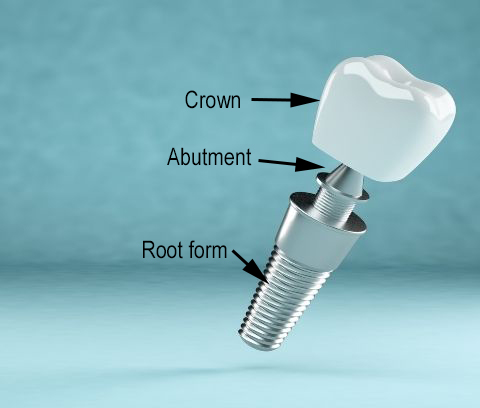
Dental implant components, including root form, abutment, and crown

Discuss your sedation options with an accredited implant dentist

Schedule an appointment for an examination. The dentist will explain your options for sedation and a comfortable procedure and recovery. And expect a skilled implant dentist to take a 3-D CT scan before recommending treatment options. Also, talk to your new dentist about your anxiety and what triggers it.


Dr. Steven Brooker, a Baton Rouge Fellow of implant dentistry, sponsors this post. Dr. Brooksher is accredited by the International Congress of Oral Implantologists.
Filed Under: Sedation Dentistry Tagged With: accredited implant dentist, bone grafting dental implant, bone shrink missing teeth, dental implant, dental implant failure, dental implant fellow, enough bone for dental implants, implant dentist graduate, international congress oral implantology, Jawbone dental implant

Tooth fillings near my gumline keep popping out

Posted on October 26, 2021 by AllSmiles.

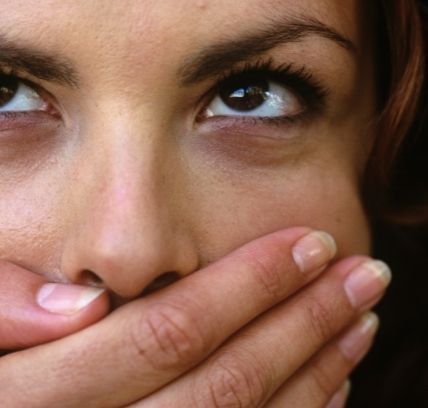
Woman covering her mouth, perhaps due to tooth fillings popping outOver the years, I’ve had problems with notching at my gumline, and my dentist covered them with bonding to prevent any more cavities. The issue affected five teeth. That was 15 years ago.

Last summer, my new dentist replaced the bonding because it was old and discolored. Since that time, the fillings on three of the five teeth popped out twice. I have slight anxiety over dental appointments, but this episode is making me nervous. I asked my dentist to find a permanent solution because the fillings popping out is increasing stress.

I have an autistic child and a stressful job, so I do not need repeated dental visits. My dentist seemed unphased by my concern and said he could use sedation whenever I needed new fillings. He doesn’t get it. Why are the fillings popping out? Also, I’ve never had sedation. Is it safe enough for me to keep getting it whenever I need new fillings? – Thank you. Katia from GA

Katia,

Thank you for your questions.

What Causes Notches on Teeth at the Gumline?

Clenching and grinding put pressure on your teeth and cause them to flex. Research shows that clenching or grinding your teeth causes notches on then near your gumline. The notches are called abfraction lesions.

How Can You Prevent Fillings from Popping Out?

Your dentist can prevent fillings near the gumline from popping out by using flexible dental composite. Silux Plus and Renamel are two brands of flexible composite. They will blend with your teeth and stay in place for years if your dentist properly bonds them. Newer dental composites are often hybrids that do not stay in long. And your dentist might be using a newer composite.

How Safe Is Sedation Dentistry?

Sedation dentistry is safe enough to use on every dental visit. Relaxing at the dental office might require the lowest level of sedation—nitrous oxide, or laughing gas. Otherwise, your dentist might prescribe an anti-anxiety for you to take before your appointment. In the United States, training requirements for dentists to administer sedation vary in each state. According to the American Dental Association, millions of dentists safely treat dental anxiety each year.

But in your case, the issue is using a dental bonding that will stay in your teeth and not pop out. If your dentist lacks the tools or materials to keep your fillings in place, we recommend that you schedule an appointment with an advanced cosmetic dentist.

We hope the information will help you make an informed decision about what to do next.


Steven Brooksher, DDS, of Baton Rouge, sponsors this post.

Filed Under: Sedation Dentistry Tagged With: advanced cosmetic dentist, Baton Rouge AACD dentist, cavities near gumline, fillings hear gumline, fillings popping out, how safe is sedation dentistry, is sedation dentistry safe, new tooth fillings, replace tooth fillings

How to get relief for painful deep dental cleanings

Posted on August 31, 2021 by AllSmiles.

My first three deep cleanings at the dentist were so painful that I did not return to continue treatment. My dentist scheduled the cleaning for several weeks, but I cannot get through them. The deep pockets in my teeth will not heal and my teeth are sensitive. My sister suggested that I ask for sedation, but I do not know what to ask for. And I hesitate to return to this dentist because I am not sure if it my gums and teeth are that bad or if the hygienist is rough. Anyway, I want to call a few dental offices and ask if they offer deep cleaning with sedation, but first I want to know what kind of sedation to ask for because if they do not offer it, I will have to keep looking. Thanks for your suggestions. – Claire from SC


Claire,

Thank you for your question. You have advanced gum disease that needs continuing care. Before your deep cleaning, you should get local anesthetic to prevent you from feeling pain. Although your gums are infected down to where the teeth and gums attach, the pain you describe sounds like something more than the cleaning is causing your pain.

Deep Dental Cleanings and Antibiotics

Sometimes deep cleaning can provoke an active infection and cause post-treatment pain. If your gum infection is aggressive, your dentist can do the following:

  1. Prescribe antibiotics for your treatment period
  2. Extend your treatment period to promote your comfort
  3. Offer sedation to relieve your anxiety

Second Opinion for Gum Disease and Deep Cleanings

A closed eye - for information on sedation dentisry in Baton Rouge

Speak with your new dentist about sedation options

We recommend that you find another dentist experienced in treating gum disease. Or you can visit a periodontist (gum specialist). Explain your experiences with your dentist and your anxiety. The dentist or periodontist will explain your sedation options. But with local anesthesia and antibiotics, your will have a better experience.

Untreated gum disease can lead to tooth loss. Although you have had a traumatic experience, please do not delay treatment.

Steven Brooksher, DDS of Baton Rouge, sponsors this post

Filed Under: Sedation Dentistry Tagged With: gum disease teeth treatment, painful deep dental cleanings, periodontal disease, sedation deep dental cleaning, sedation gum disease, switch dentist gum disease

My dentist placed four gray crowns on my front teeth

Posted on June 21, 2021 by AllSmiles.

I’ve had composite bonding on four front teeth since 2002. Last September, one of the teeth chipped. My new dentist of 2 years suggested replacing the composite with crowns for all four teeth to prevent them from chipping again. Unfortunately, I did not know much about crowns, so I agreed to the procedure. I have four ceramic crowns that look gray in pictures. My center front teeth and the ones immediately next to them are the teeth with crowns. And the crowns do not match my other teeth. So my smile is gray and white. I have no trust in my dentist. This episode has made me so nervous about trusting any dentist. My anxiety level is high even with teeth cleaning, so the hygienist gives me nitrous oxide first. I hate to think about what is involved in removing my gray crowns. What are my options? – Thank you. Louis from OK


Louis,

We are sorry to hear about your horrible experience with crowns. Although your dentist offered aggressive treatment to correct dental bonding, your only option now is to find a dentist to replace your four crowns.

Replacing New Gray Dental Crowns

If a dentist gives you new dental crowns that are the wrong color, only new crowns will correct the issue. Dental ceramic is colorfast, and the color will not change. But look for an experienced cosmetic dentist to replace your crowns. A dentist who is concerned about aesthetics—the appearance of your smile—will not bond crowns to your teeth unless they fit well and match your natural teeth.

What to expect from your new cosmetic dentist

  • Discussion about your crown color – A cosmetic dentist will ensure you like the color of your natural teeth. If you want whiter teeth, the dentist will recommend teeth whitening first. And then, a lab will make your new crowns to match your brighter smile.
  • Temporary crowns – You will wear temporary crowns to ensure they look good and feel comfortable. But your final crowns will look even better.
  • Try on your new crowns – Your cosmetic dentist should use a clear paste to put your crowns on your teeth so you can see the color, shape, and how they feel. A skilled dentist will do this before bonding or cementing crowns to your teeth.


Request a Consultation

A closed eye - for information on sedation dentisry in Baton Rouge

Speak with your dentist about sedation options

Find a few accredited cosmetic dentists in your area. Look at their website smile gallery for cases like yours. And schedule a consultation with a cosmetic dentist to discuss your options. Also, speak with the dentist about your anxiety and discuss which form of sedation you may need while the dentist completes your crowns.


Steven Brooksher, DDS of Baton Rouge, sponsors this post.

Filed Under: Sedation Dentistry Tagged With: advanced cosmetic dentist, american academy cosmetic dentistry baton rouge, crowns sedation dentistry, crowns wrong color, front teeth crowns, front teeth crowns don't match, gray crowns, gray crowns front teeth, gray crowns on teeth, replace crowns, switch dentists crowns

Why do new crowns make my teeth sensitive and burn my gums?

Posted on May 28, 2021 by AllSmiles.

The whole process of getting crowns from my dentist has been a nightmare. They are burning my gums now, and my teeth are sensitive. I’m blaming myself a bit because the temporary crowns were a mess, too. They felt like they were leaking, and my teeth hurt beneath them. I told my dentist that I was worried about infection, so he prescribed an antibiotic. He did not check my teeth or anything–just gave me a prescription. When I got my six new crowns, my dentist filed and re-filed my teeth because my bite was off. I felt fluid rushing beneath the crowns whenever I drank anything, so my dentist sent the crowns back, and I wore temporaries. The temporaries felt better than the crowns and the first set of temporaries. Now I’ve been wearing my new crowns for two weeks, and my teeth are sensitive, and my gums are burning. Fortunately, my dentist used temporary cement. But something is not right with the crowns. But as I said, this has been a nightmare from day one. What should I do to prevent this situation from getting worse? I had a little anxiety before this process began. But I have hyperventilated three times at the dental office recently. Can I switch dentists in the middle of treatment, or is it too late? – Marquita from GA

Marquita,

Dr. Brooksher would need to examine your teeth, gums, and new crowns for an accurate diagnosis. But we can be helpful. Please do not allow your dentist to bond your crowns to your teeth permanently.

New Dental Crowns and Burning Gums

If your gums are burning and teeth are sensitive after new dental crowns, ask your dentist for the exact composition of the crowns. When a lab makes crowns, they send a dental alloy certificate listing all materials in the crown. And if your crowns are porcelain-fused-to-metal, you might have a metal allergy or sensitivity. It would explain why your gums are burning, and your teeth are sensitive.

Challenges of Placing Dental Crowns on Front Teeth

Face of a woman relaxed during dental treatment for information on sedation dentistry from Dr. Brooksher of Baton Rouge

Sedation will relieve your anxiety while a cosmetic dentist restores your teeth

When a dentist places a crown on your front teeth, they must ensure your bite is adjusted. But your dentist placed six crowns, which increases the challenge of bite adjustment. A dentist with advanced training in occlusion and bite can adjust your bite accurately without extensively filing your teeth down to stumps.

And when you suspected that you might have a tooth infection, your dentist prescribed antibiotics instead of identifying the cause of your discomfort.

Can You Switch Dentists in the Middle of Treatment?

Yes, you can switch dentists in the middle of getting new crowns. First, look for a dentist with advanced cosmetic dentistry training—preferably accredited—to examine your teeth. The dentist can explain sedation options to prevent anxiety from overwhelming you. Then, the dentist will determine if your crowns have a metal foundation or if something else is causing tooth sensitivity and burning gums. Your new crowns should feel so comfortable that you don’t notice them at all.

Steven Brooksher, DDS of Baton Rouge, sponsors this post. Read why so many of his patients think he is among the best dentists in Baton Rouge.

Filed Under: Sedation Dentistry Tagged With: allergic to new crowns, Baton Rouge AACD dentist, Baton Rouge accredited cosmetic dentist, Baton Rouge sedation dentistry, cosmetic dentist crowns, dental anxiety, dental crown second opinion, hyperventilate at dentist, Louisiana AACD dentist, new crowns bite off, new crowns burn gums, new crowns front teeth, new crowns grind teeth, new crowns teeth sensitive, switch dentists, switch dentists middle of treatment

Will I need general anesthesia for wisdom tooth extraction?

Posted on May 11, 2021 by AllSmiles.

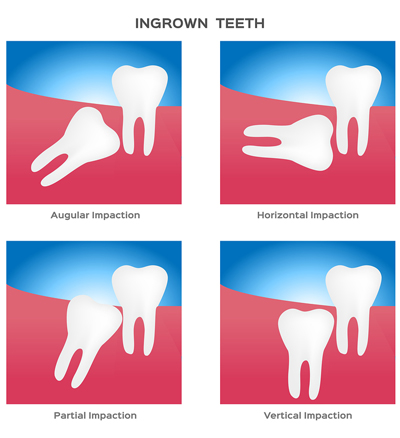
I am 44 years old and have three impacted wisdom teeth. One tooth is under the bone. I am wondering if general anesthesia is necessary or if sedation is enough. I’ve never had general anesthesia, and I prefer not to get it. Thanks. Wade from AR


Wade,

Thank you for your inquiry. Although we do not have your case details, most wisdom tooth extractions do not require general anesthesia. Other levels of sedation work well with extractions without making you unconscious, like general anesthesia.

Moderate Sedation for Wisdom Teeth Extraction

Four diagrams of impacted wisdom teeth that require sedation dentistryIntravenous, moderate sedation is known as twilight sedation. Your state will be between awake and asleep. And you will drift in and out of consciousness. Most patients do not remember anything about the procedure except feeling sleepy and relaxed. Moderate sedation offers deeper relaxation than sedation with nitrous oxide, which gives you a sense of well-being while you are fully awake.
Deep Sedation for Wisdom Teeth Extraction

Deep sedation is drug-induced, depresses consciousness, and prevents you from awakening easily.

General Anesthesia for Wisdom Teeth Extraction

General anesthesia makes you completely unconscious. Risks increase with general anesthesia, too.

What Makes Some Wisdom Teeth Extractions More Difficult?

As we age, several factors can make wisdom teeth extractions more difficult. And your dentist will recommend sedation based on your sensitivity and condition of your teeth.

  • Bone – The older the bone is, the less pliable it becomes.
  • Cementum – Calcified bone-like tissue at the tooth roots accumulates. Although cementum and can make extractions more challenging, an oral surgeon or a dentist with experience in wisdom teeth extractions will be successful.
  • Position – Impacted wisdom teeth may grow sideways or lean against other teeth. A skilled dentist or oral surgeon can remove them without harming nearby teeth.

Sedation Second Opinion

If you need a tooth extraction, but your dentist or oral surgeon recommends general anesthesia, ask why. Underlying factors might be influencing the recommendation. If not, you can get a second opinion from another sedation dentist or oral surgeon to discuss your options.


Dr. Steven Brooksher of Baton Rouge, LA, sponsors this post.

Filed Under: Sedation Dentistry Tagged With: Baton Rouge sedation dentistry, deep sedation dentistry, effects of sedation dentistry, general anesthesia wisdom teeth, moderate sedation dentistry, sedatiion dentistry second opinion, sedation dentistry, sedation wisdom teeth extraction, what makes wisdom teeth extractions difficult

Why Are My Crowns Gray and How Long Will It Take to Correct Them?

Posted on March 29, 2021 by AllSmiles.

I fell in January and damaged three front teeth. My dentist did root canals and crowns on all three teeth – my center front teeth and right incisor. Although my dentist is easygoing about redoing the work for me, the crowns are too thick, and the color is off. They do not match my natural teeth. The crowns look gray, and although my dentist is willing to redo them, he says that he cannot guarantee an exact match. He says he will get the core as white as possible. Am I supposed to settle for gray teeth? My anxiety level is increasing over how many more dental visits it will take to get this right. Thank you. Sheron


Sheron,

Unfortunately, like many family dentists, your dentist does not know enough about cosmetic dentistry and matching tooth color. It takes post-graduate cosmetic dentistry training and an artistic eye to match crowns to the characteristics and color of your natural teeth.

If Dental Crowns Are Too Thick and the Wrong Color

If your dental crowns are too thick and the color is, you should not settle for your dentist’s skill level. We encourage you to insist on getting what you agreed to—natural-looking crowns. No one should be able to tell that your front teeth are crowns.

Although you did not give us clinical details about the types of crowns your dentist placed, several factors can cause crowns to look gray.

  • Pure ceramic crowns with a metal post – A metal post and core reinforce a tooth, and the color of the metal can show through the ceramic.
  • A skilled cosmetic can provide crowns that are not gray. Either of these methods might work:
  • Fiberglass post – A fiberglass post and a composite core close to the color of your natural teeth will give your crowns natural translucence.
  • Metal core with opaque layer – An opaque layer of composite bonding can be layered over the metal core. It will block the metallic color. Afterward, the dentist can bond the crown over the opaque layer.
  • Incorporate opaquing into the crown – A skilled cosmetic dentist can instruct the ceramist about the crown color and the metal core. The ceramist can opaque the crown to conceal the metal.

Find a Dentist Who Can Reproduce Your Smile

Face of a woman relaxed during dental treatment for information on sedation dentistry from Dr. Brooksher of Baton Rouge

Sedation will help your new dentist complete as much work as possible while you relax

Unfortunately, your dentist does not have enough training to correct your crowns and is not readily going to refer you to a cosmetic dentist who can. Dental schools minimize cosmetic concerns, and many in the dental profession do the same. Although Dr. Brooksher would need to examine your teeth, it seems that your case requires only a moderate level of aesthetic skill.

We recommend that you schedule a consultation with a skilled cosmetic dentist to explain your treatment options. Hopefully, your dentist will refund you or partially compensate you for being unable to give you crowns that reproduce the look of your natural teeth.

Although you will need more dental work, sedation dentistry can help a cosmetic dentist complete as much work as possible while relaxing and giving you quality results.


Steven Brooksher, DDS, of Baton Rouge sponsors this post.

Filed Under: Sedation Dentistry Tagged With: crowns too thick, crowns wrong color, gray dental crowns, second opinion cosmetic dentist

  • « Previous Page
  • 1
  • 2
  • 3
  • 4
  • Next Page »
Dr. Steven Brooksher, DDS.
Meet
Dr. Brooksher

Dr. Brooksher is a past winner in the International Smile Gallery competition of the American Academy of Cosmetic Dentistry.

Meet Dr. Brooksher
Dr. Brooksher Smile Gallery
Gallery
of Smiles

Can you imagine yourself with one of these beautiful new smiles?

See the Gallery

Reviews

Slide 1

“I have horrible anxiety at dental offices. I have never been as comfortable as I am at Dr. Brooksher’s office. Everyone is really nice, accommodating, and understanding!”

Jay Alex

Slide 1 - copy

“Dr. Brooksher is humble, kind, funny, and easy to get along with. His staff is friendly, too! I have the utmost respect for his work. I've never been this comfortable going to the dentist.”

Christopher Jeffers

Slide 1 - copy - copy

“Dr. Brooksher came highly recommended by so many of my present and former coworkers. I've had fear of the dentist all my life and finally got the courage to go. I can now say for myself that he is the best—hands down.”

Patricia Madison Anthony

Slide 1 - copy - copy - copy

“Sometimes I feel that Dr. Brooksher and his staff care more about my teeth than I do. They are professional and prompt, so definitely be on time for your appointment!”

Brock George

Slide 1 - copy - copy - copy - copy

“I’ve been a patient at Dentistry by Brooksher for more than 15 years. They are always thorough and professional. Dr. Brooksher explains your options and the best treatment plans. He and his staff are a pleasure to deal with.”

Wilson Alvarez

contact
Map Too Brooksher Dental Office
Steven H. Brooksher, DDS, AAACD, FICOI
1010 South Acadian Thruway
Ste A
Baton Rouge, LA 70806

OFFICE HOURS Mon - 8:00 am - 5:00 pm
Tuesday - 7:00 am - 4:00 pm
Wed - 8:00 am - 5:00 pm
Thurs - 7:00 am - 4:00 pm
Friday (Every other) - 8:00 am - 12:00 pm

PHONE (225) 346-8625

Request an
Appointment
Dr. Steven Brooksher, DDS.
Address: Steven H. Brooksher, DDS
1010 South Acadian Thruway, Ste A
Baton Rouge, LA 70806
Phone: (225) 346-8625
Pay Online
REVIEW ME:
Office Hours: Mon - 8:00 am - 5:00 pm
Tuesday - 7:00 am - 4:00 pm
Wed - 8:00 am - 5:00 pm
Thurs - 7:00 am - 4:00 pm
Friday (Every other) - 8:00 am - 12:00 pm
  • Best Dentist in Baton Rouge
  • Blog
  • Baton Rouge Lumineers
  • Privacy Policy

©2015-2026 Steven H. Brooksher, DDS • All rights reserved •

Website Design and SEO by Infinity Dental WebIDW logo

Mobile Menu Icon Dr. Steven Brooksher, DDS.
  • Home
  • About Us
    • Meet Dr. Brooksher
    • Meet Our Team
    • Your First Visit
    • Contact Us
    • What Makes Us Different?
    • Patient Forms
    • Financial Policies
    • Pay Online
    • Request an Appointment
  • Cosmetic Dentistry
    • Cosmetic Dentistry
    • Smile Gallery
    • Porcelain Veneers
    • Dental Bonding
    • Teeth Whitening
    • Smile Makeover
    • SmileFy Smile Design
    • Porcelain Crowns
  • Tooth Replacement
    • Dental Implants
    • Dental Implant Hybrids
    • Implant Overdentures
    • Dentures
  • Sedation
  • Other
    • Emergency Dentist
    • Metal-Free Dentist
    • Porcelain Crowns
    • TMJ Treatment